

Biostatistics & Epidemiology
AKT High-Yield Breakdown
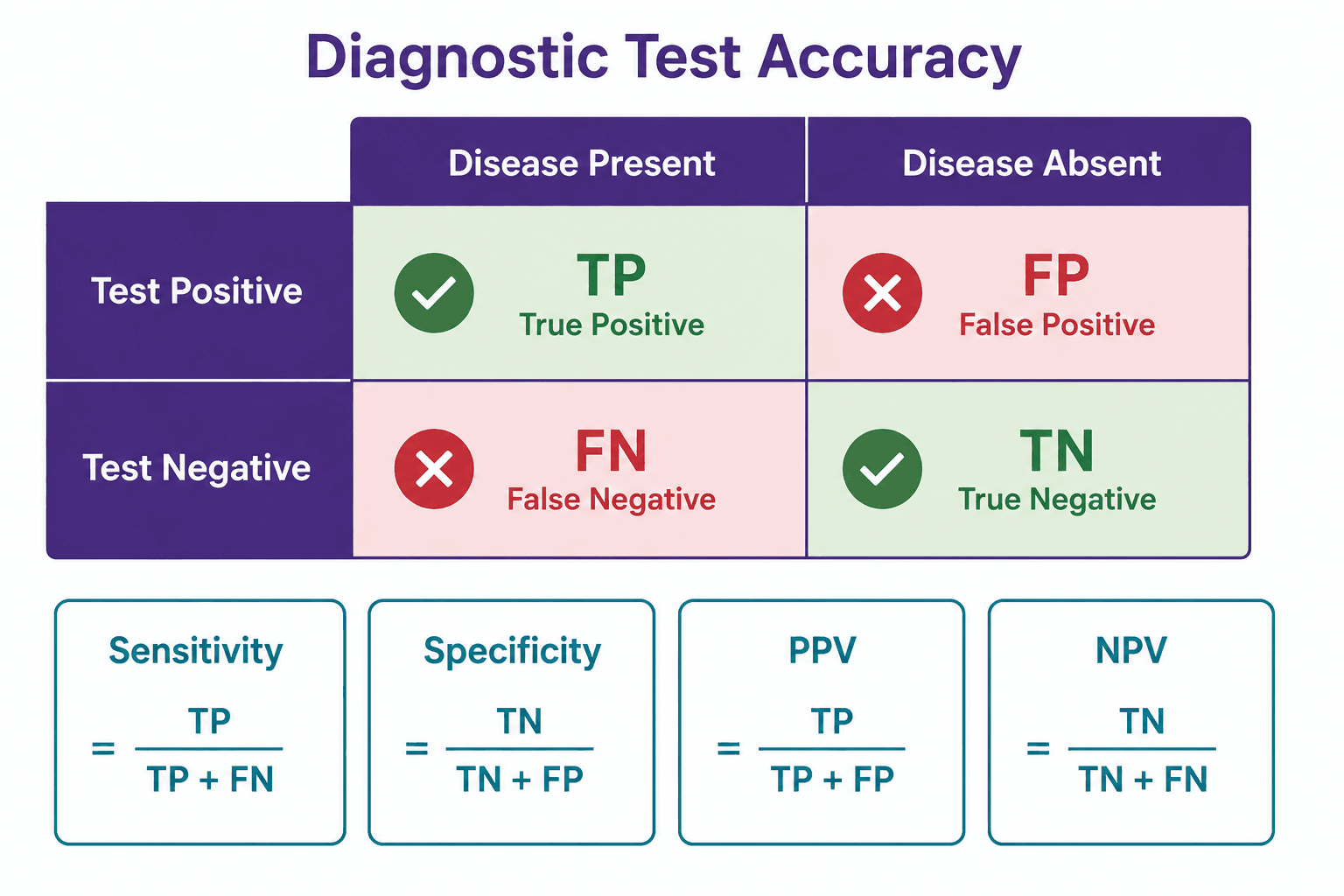
Biostatistics and epidemiology provide the quantitative tools to measure disease burden, test interventions, and interpret screening programmes. The AKT reliably tests 2×2 table calculations, NNT and NNH, sensitivity and specificity, measures of association, and the principles underpinning screening.
What You'll Learn
Master the 2×2 table calculations (sensitivity, specificity, PPV, NPV), relative risk vs odds ratio, absolute risk reduction and NNT, the Wilson-Jungner screening criteria, lead time and length biases, Hardy-Weinberg equilibrium basics, and normal distribution principles for the AKT.
Practise Biostatistics & Epidemiology MCQs
From 2×2 table calculations (sensitivity, specificity, PPV, NPV) and NNT to relative risk versus odds ratio, Wilson-Jungner screening criteria, lead time bias, and normal distribution properties — tackle focused MCQs across the full Biostatistics curriculum.
Measures of Disease Frequency
Understanding how to measure and interpret disease frequency is essential for interpreting epidemiological evidence and justifying screening and prevention programmes.
- Prevalence: proportion of a population that has a disease at a given point in time; = (cases ÷ total population) × 1000 (or 100,000); reflects chronic disease burden; affected by incidence and disease duration
- Incidence rate: new cases per unit population per unit time; reflects rate of developing disease; = (new cases ÷ population at risk × time); used in cohort studies
- Cumulative incidence (attack rate): proportion of a defined population that develops disease over a specified period; used in outbreak investigations
- Prevalence = incidence × duration (for steady-state diseases)
- Mortality rate: deaths per 1000 population per year; crude or age-standardised (removes effect of age distribution differences)
- Case fatality rate: proportion of cases who die from the disease; = (deaths from disease ÷ number of cases) × 100; disease severity metric
Create your free account
You can preview topic pages for free. Create an account to start your revision setup, then upgrade when you are ready to unlock the complete high-yield notes and exam tips.